
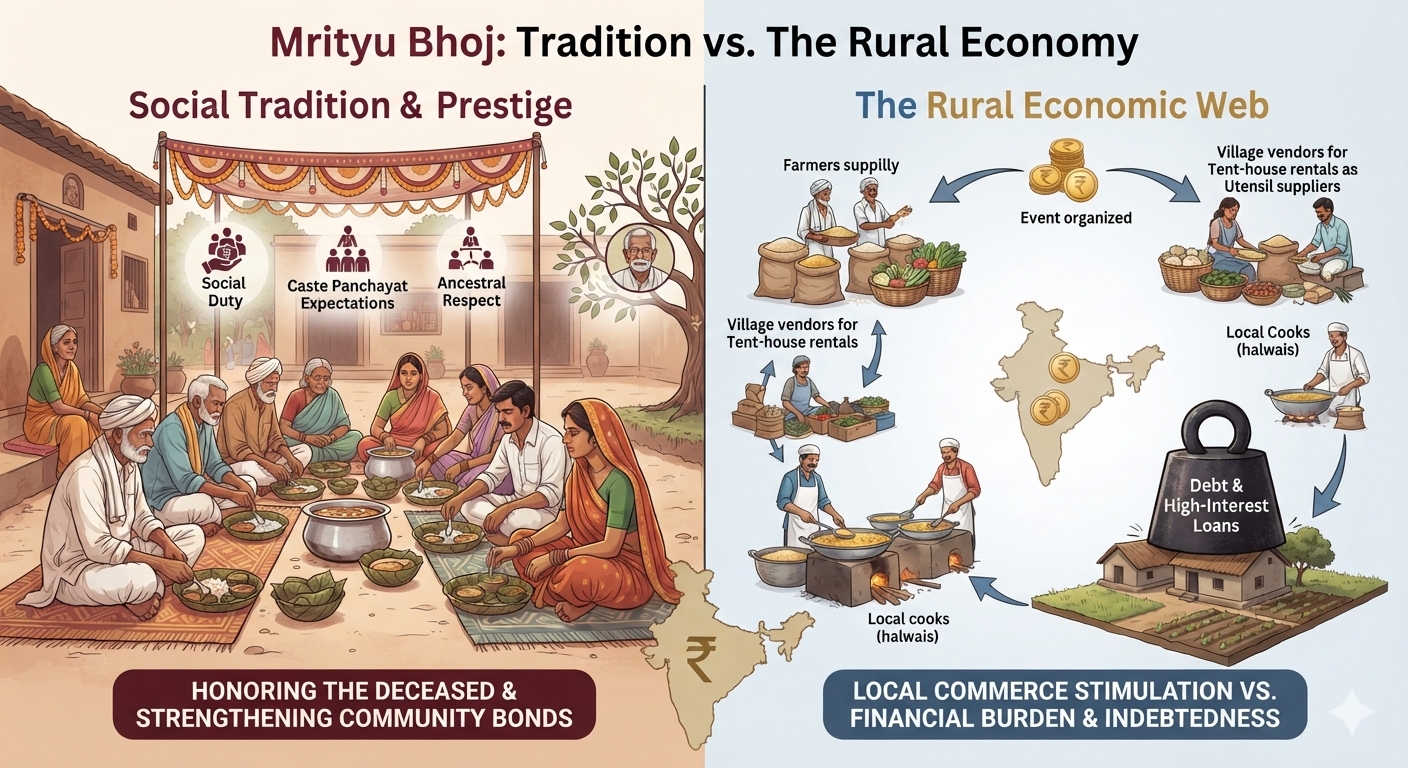
मृत्यु भोज: केवल एक परंपरा या ग्रामीण अर्थव्यवस्था की एक कड़ी?
जब भी मृत्यु भोज (तेरहवीं या ब्रह्मभोज) की प्रथा पर सवाल उठते हैं, तो सारा दोष अक्सर ब्राह्मण समाज पर मढ़ दिया जाता है। यह धारणा बना दी गई है कि यह प्रथा केवल ब्राह्मणों के लाभ के लिए चलाई जा रही है। लेकिन यदि हम निष्पक्ष होकर इसके व्यावहारिक और आर्थिक पक्ष को देखें, तो तस्वीर बिल्कुल अलग नजर आती है। किसी भी कर्मकांड में पुरोहित को मिलने वाली दक्षिणा कुल खर्च का एक अत्यंत छोटा हिस्सा होती है, जबकि इस पूरे आयोजन से समाज के कई अन्य श्रमजीवी और उत्पादक वर्गों की रोजी-रोटी सीधे तौर पर जुड़ी होती है।
1. अंतिम संस्कार से जुड़े पारंपरिक कार्य मृत्यु के बाद की प्रक्रिया में सबसे पहला और महत्वपूर्ण योगदान डोम समाज का होता है, जो श्मशान घाट पर अंतिम संस्कार की व्यवस्था संभालते हैं। इसके बिना क्रियाकर्म आगे नहीं बढ़ सकता, और इस सेवा का पारिश्रमिक भी एक बड़ा हिस्सा होता है।
2. पारंपरिक हस्तशिल्प और कुटीर उद्योग कर्मकांड और भोज की तैयारी में कई पारंपरिक वस्तुओं की आवश्यकता होती है: कुम्हार समाज: पूजा और भोजन के लिए मिट्टी के दीये, घड़े (हंडिया) और कुल्हड़ की आपूर्ति करता है। मोहली/बांसफोड़ समाज: बांस से बने सूप, दौरा और टोकरियों की व्यवस्था करता है, जो इन अनुष्ठानों में अनिवार्य माने जाते हैं।
3. कृषि, पशुपालन और खाद्य आपूर्ति मृत्यु भोज एक बड़े सामुदायिक आयोजन की तरह होता है, जिसमें बड़ी मात्रा में कच्चे माल की खपत होती है: किसान और सब्ज़ी उत्पादक (कोयरी/कुशवाहा आदि): बड़े पैमाने पर सब्ज़ियों और अनाज की आपूर्ति करते हैं। पशुपालक (अहीर/यादव समाज): भोज में लगने वाले दूध, दही, घी और पनीर की मांग को पूरा करते हैं, जिससे उनकी सीधा आय होती है।
व्यापारी वर्ग (तेली/बनिया): राशन, तेल, मसाले और फल आदि उपलब्ध कराते हैं।
4. सेवा और श्रम क्षेत्र आयोजन को सफल बनाने में कई सेवा प्रदाताओं की भूमिका होती है: हलवाई समाज: सैकड़ों लोगों के लिए भोजन तैयार करने का मुख्य कार्य संभालता है। टेंट, लाइट और बर्तन व्यवसायी: इनके माध्यम से ग्रामीण और शहरी क्षेत्रों के कई छोटे व्यापारियों और दिहाड़ी मजदूरों को रोजगार मिलता है।
5. सामाजिक सहयोग की भावना पारंपरिक रूप से इस आयोजन में परिवार के सदस्य, रिश्तेदार और पड़ोसी अपनी क्षमता के अनुसार 100, 200 या 500 रुपये की आर्थिक भेंट (व्यवहार) देते हैं। यह एक तरह का सामाजिक बीमा (Social Security) था, ताकि शोक संतप्त परिवार पर अचानक आए आर्थिक बोझ को मिल-बांटकर कम किया जा सके। निष्कर्ष कोई भी पुरोहित या समाज किसी परिवार को अपनी क्षमता से बाहर जाकर कर्ज लेने के लिए बाध्य नहीं करता।
शास्त्रों में भी व्यक्ति को अपनी श्रद्धा और सामर्थ्य के अनुसार ही कर्म करने की बात कही गई है। यदि समाज सुधार के नाम पर दिखावे और कर्ज लेकर भोज करने की प्रवृत्ति को रोका जाए, तो यह निश्चित रूप से एक स्वागतयोग्य कदम है। लेकिन इस पूरी व्यवस्था के लिए केवल एक वर्ग को दोषी ठहराना और घृणा फैलाना न तो तर्कसंगत है और न ही सामाजिक सद्भाव के लिए उचित। किसी भी परंपरा में सुधार संवाद और समझदारी से होना चाहिए, न कि किसी एक समुदाय के प्रति पूर्वाग्रह रखकर।
How May I help you. please write me a message .! We will respond as soon as possible.

 *जय गुरुदेव *कृपया अपना पता भेजें* पूरा नाम / Full Name : जन्म की तारीख समय स्थान/ Date of Birth time: पूरा पता / Address कृपया अपना परिचय और आपको क्या समस्या है लिखकर बताएं.? क्या काम करते हैं? Mantra knowledge ?
Visit website: mtyv.poweredindia.com Call  919560160184 https://wa.me/919560160184
https://www.narayanduttshrimali.com
Mrityu Bhoj: Just a Tradition or a Link to the Rural Economy?
Whenever questions arise about the practice of Mrityu Bhoj (Terahvin or Brahmabhoj), the blame is often placed on the Brahmin community. The perception is that this practice is practiced solely for the benefit of Brahmins. However, if we objectively examine its practical and economic aspects, the picture is quite different. The dakshina (donation) given to the priest in any ritual is a very small part of the total expenditure, while the livelihoods of many other working and productive sections of society are directly linked to this entire event.
1. Traditional Funeral Rituals
The Dom community plays a primary and most important role in the post-death process, managing the funeral arrangements at the cremation ground. Without this, the rituals cannot proceed, and the remuneration for this service also constitutes a significant portion.
2. Traditional Handicrafts and Cottage Industries
Many traditional items are required for the preparation of rituals and feasts:
The Potters' Community: supplies earthen lamps, pitchers (handiyas), and kulhars for worship and meals.
The Mohli/Bansphod Community: provides bamboo spoons, dauras, and baskets, which are essential for these rituals.
3. Agriculture, Animal Husbandry, and Food Supply
The funeral feast is a major community event, consuming a large quantity of raw materials:
Farmers and vegetable growers (Koeri/Kushwaha, etc.): supply vegetables and grains on a large scale.
Livestock farmers (Ahir/Yadav community): meet the demand for milk, yogurt, ghee, and cheese used in the feast, which provides them with direct income.
The Merchant Community (Teli/Bania): provides rations, oil, spices, and fruits, etc.
4. Service and Labor Sector
Many service providers play a role in making the event a success:
The Halwai community: Handles the primary task of preparing food for hundreds of people.
Tent, Light, and Utensil Vendors: These provide employment to many small traders and daily wage laborers in rural and urban areas.
5. Spirit of Social Cooperation
Traditionally, family members, relatives, and neighbors contribute financial gifts (vyavyaar) of 100, 200, or 500 rupees, depending on their capacity. This was a form of social security to help alleviate the sudden financial burden on the bereaved family by sharing it.
Conclusion
No priest or community forces any family to borrow money beyond their means. The scriptures also advise individuals to act according to their faith and ability.
If the tendency to organize feasts for show and borrowed money in the name of social reform is curbed, it is certainly a welcome step. But blaming only one class for this entire system and spreading hatred is neither logical nor appropriate for social harmony. Reforming any tradition should be done through dialogue and understanding, not by being biased towards any one community.
How May I help you? Please write me a message.!
We will respond as soon as possible.✅🇮🇳
*Jai Gurudev *Please send your address*
Full Name:
Date of Birth Time:
Full Address
Please introduce yourself and tell us what your problem is.
What work do you do?
Mantra knowledge?
Visit website:
mtyv.poweredindia.com
Call 🤙 919560160184 https://wa.me/919560160184
https://www.narayanduttshrimali.com